
Water Quality Sensors
Continuous water quality sensing for marine and coastal environments.
What is water quality sensors?
Water quality monitoring measures the chemical, physical and biological condition of water in real time. For marine and coastal operators, continuous data is essential for early-warning, regulatory compliance and operational decisions.
Zenocean water quality sensors combine optical, electrochemical and ion-selective technologies in pressure-tolerant housings designed for unattended deployment on buoys, fixed stations and autonomous platforms.
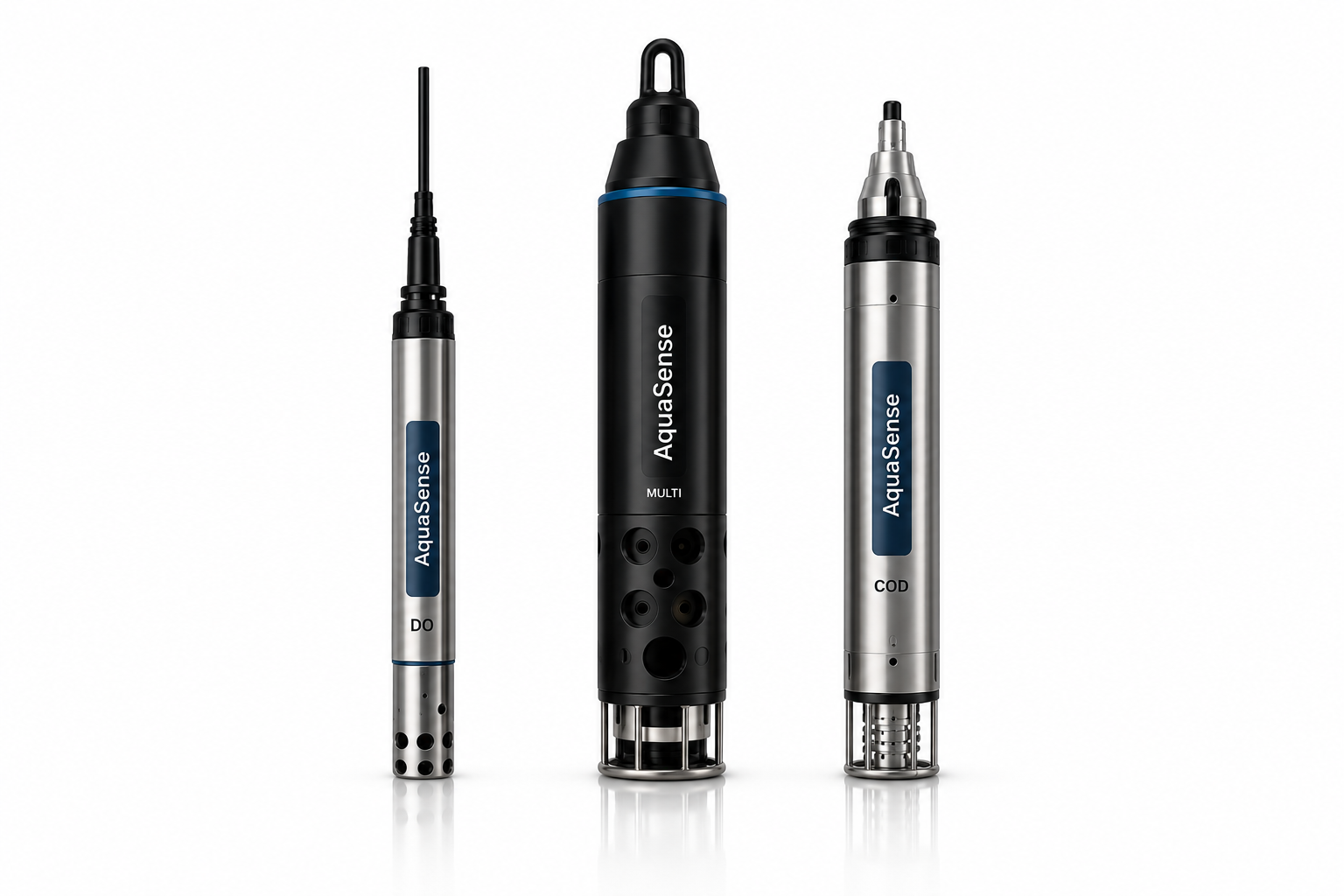
Every sensor in the AquaSense and AquaGo series supports digital output (RS485 / Modbus) and is field-serviceable for long-duration campaigns.
Parameters We Monitor
The water quality sensors series covers the full spectrum of water quality parameters used in marine and coastal monitoring.
Dissolved Oxygen
Optical DO sensing for aquaculture and ecology.
pH
Industrial glass pH electrodes for continuous use.
Salinity / Conductivity
Inductive EC for any salinity range.
Turbidity
Optical turbidity with wiper for low drift.
Chlorophyll-a
Fluorometric algae biomass measurement.
Ammonium (NH4)
Ion-selective nutrient monitoring.
Nitrate (NO3)
UV nitrate, reagent-free.
Applications
Where water quality sensors make the biggest impact.
Aquaculture Farms
DO, temperature and salinity monitoring for fish and shellfish farms.
Coastal & Estuarine
Real-time nutrient and turbidity tracking in estuaries and bays.
Water Quality Networks
Multi-site networks for regulatory and environmental compliance.
Research Campaigns
Long-duration deployments for academic and government research.
System Workflow
From sensing to decision — how Zenocean integrates water quality sensors into a complete observation system.
- 01
Sensor
AquaSense / AquaGo measures the parameter.
- 02
Platform
Buoy, station or USV hosts the sensor payload.
- 03
CoreLink
Telemetry / RTU forwards the data securely.
- 04
Software
ZenoCloud visualizes, alerts and analyses.
- 05
Decision
Operators act on real-time, validated insight.
Products
19 products
WQ-700
Flagship multi-parameter water quality sonde with anti-fouling design for unattended deployment.
AquaSense-DO
Optical dissolved oxygen sensor with high stability and long-life membrane.
AquaSense-pH
Industrial pH sensor with rugged glass electrode for continuous monitoring.
AquaSense-ORP
Oxidation-reduction potential sensor for redox tracking in surface and process water.
AquaSense-EC
Inductive conductivity sensor for reliable EC measurement in any salinity range.
AquaSense-Sal
High-accuracy salinity sensor calibrated for coastal and open-ocean use.
AquaSense-Turb
Optical turbidity sensor with wiper for low-drift suspended solids data.
AquaSense-TSS
Total suspended solids probe for water quality and discharge compliance.
AquaSense-COD
UV-based chemical oxygen demand sensor for real-time organic load tracking.
Datasheet on request AquaSense-NH4
Ion-selective ammonium sensor for nutrient monitoring in fresh and brackish water.
AquaSense-NO3
UV nitrate sensor delivering reagent-free, continuous nutrient data.
AquaSense-Chl
Chlorophyll-a fluorometer for algae biomass and water quality studies.
AquaSense-BGA
Blue-green algae fluorometer for cyanobacteria detection and early warning.
AquaSense-Oil
Oil-in-water fluorometer for leak detection and environmental compliance.
Datasheet on request AquaSense-Multi
Compact multi-parameter sonde with configurable sensor stack.
AquaGo-DO
Portable optical DO meter for field spot-checks and quick surveys.
AquaGo-Multi
Handheld multi-parameter meter for rapid water quality assessments.
AquaGo-Trace
Portable trace-level meter for precision field measurements.
AquaGo-Pro
Professional-grade handheld with logging, GPS and Bluetooth.
Frequently Asked Questions
What is dissolved oxygen and why does it matter?
Dissolved oxygen (DO) is the amount of oxygen present in water. It is critical for aquaculture and ecology — low DO can cause fish kills and indicate pollution events.
How often should water quality sensors be calibrated?
Most optical sensors hold calibration for 3–12 months under normal conditions. Electrochemical sensors (pH, ORP) typically require monthly calibration in field service.
What deployment options exist?
Zenocean sensors deploy on surface buoys, subsurface moorings, seabed frames, fixed stations and autonomous platforms. Pressure ratings extend to 200 m.
Which communication protocols are supported?
RS485 / Modbus is standard. SDI-12 and analog outputs are available on selected models.